How to get a diagnosis:A dermatologist can often look at the skin and tell whether a patient has tinea versicolor. If there is any doubt, the dermatologist will do one of the following to make an accurate diagnosis: - Gently scrape off a bit of the skin. This will be examined under a microscope.
- Look at the skin with a special device called a Wood's lamp. The dermatologist will hold the Wood's lamp about 4 or 5 inches from the affected skin. If the patient has tinea versicolor, the affected skin appears yellowish green in color when looked at with this lamp.
What are the causes?Yeast normally live on our skin. When the yeast overgrows, it causes the skin disease tinea versicolor. It is believed that the following can cause the yeast to overgrow: - Hot, humid weather
- Lots of sweating
- Oily skin
- A weakened immune system
How is tinea versicolor spread?Tinea versicolor is not contagious. It is not harmful, but many people dislike the way it dicolors the skin.
Prognosis:With treatment, the yeast is easy to kill. The skin, however, may stay lighter (or darker) for weeks or months. The skin will eventually return to its normal color. To help even out your skin tone, you should protect your skin from the sun and not tan. Tinea versicolor can return. When the air outdoors is warm and humid, the yeast can quickly grow out of control. Some people who live in a tropical climate may need to use a medicated cleanser to prevent the yeast from overgrowing. People who live in an area that becomes warm and moist each spring may see tinea versicolor return every year. |
What is Tinea versicolor?Everyone has yeast living on their skin. When the yeast grows out of control, a person can contract tinea versicolor. A dermatologist may say that you have a fungal infection on your skin. Yeast is a type of fungus.
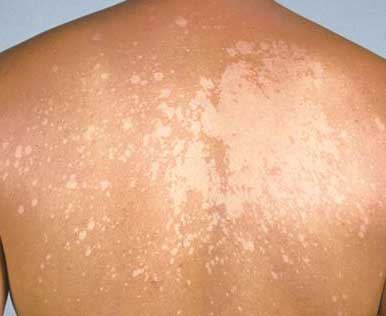
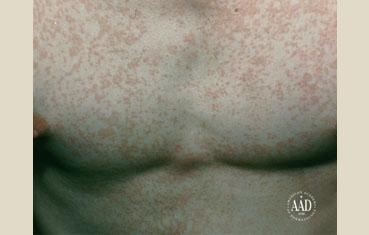
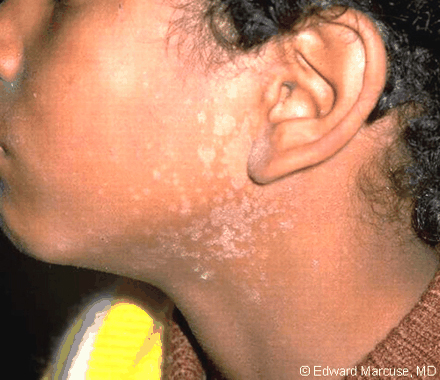
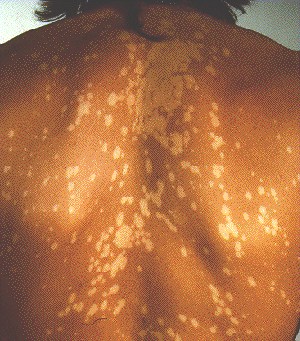
What are the Symptoms?The first sign of tinea versicolor is often spots on the skin. The other signs and symptoms are: - The spots are lighter (sometimes darker) than the surrounding skin. The color of the spots can be white, pink, salmon, red, tan, or brown.
- The spots can appear anywhere on the body.
- Spots can be dry and scaly.
- Skin may itch where the spots appear.
- Spots become more noticeable as the skin tans. The yeast prevents the skin from tanning.
- Spots grow slowly.
- As the yeast grows, the spots can combine and form patches of lighter (or darker) skin.
- The spots may disappear when the temperature drops and return in the spring or summer when the air gets warm and humid.
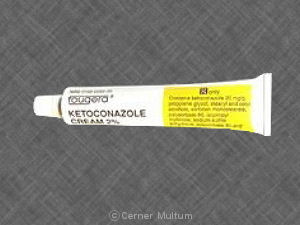
Treatment: What a dermatologist prescribes depends on several things. These include where the tinea versicolor appears on the body, how much of the skin is affected, how thick the spots have grown, and climate. Treatment for tinea versicolor may include: - Medicine applied to the skin: This is the most common treatment. There are anti-fungal shampoos, soaps, creams, and lotions that can keep the yeast under control. The active ingredient in these medicines is often selenium sulfide, ketoconazole, or pyrithione zinc.
- Medicated cleansers: Tinea versicolor often returns, especially when a person lives in a place that is warm and humid. Using a medicated cleanser once or twice a month, especially during warm and humid periods, can prevent the yeast from overgrowing again.
- Anti-fungal pills: A dermatologist may prescribe these pills if the tinea versicolor covers a large area of the body, is thick, or often returns after it is treated. These pills are taken for a short time. But anti-fungal pills can cause unwanted side effects. They can interfere with other medicine that you take. A dermatologist will monitor a patient who takes this medicine.
 |